by Laura Bernardeschi Nelson
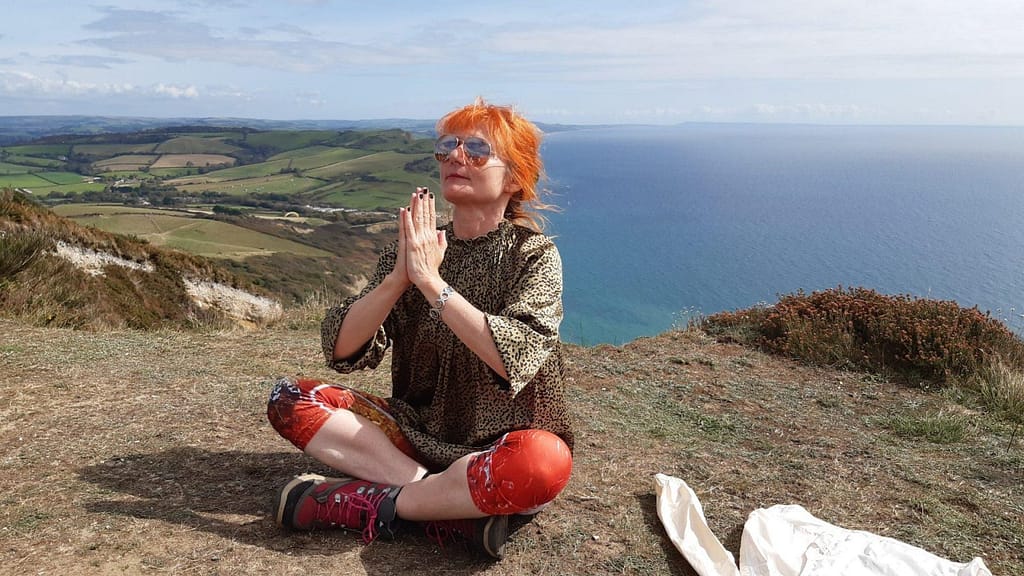
We’ve all had that one toxic friend. You know the type: charismatic, glowing, makes you feel like the centre of the universe for a few glorious hours—then leaves you with a splitting headache and consequences you’ll be paying for years later.
For me, that friend was the sun.
Growing up in Italy in the 1980s, a tan wasn’t just a holiday souvenir; it was practically a social obligation. If you came back from summer still pale, people assumed you were either gravely ill or had spent three months hiding indoors with your grandmother.
This presented a problem for me because, while my friends transformed into golden Mediterranean goddesses, I remained stubbornly committed to what can only be described as the “milk-bottle aesthetic”. Blonde hair, green eyes, and skin so white it practically reflected moonlight.
The Nivea Years and the Human Lobster Phase
As a teenager, I was desperate to fit in. My poor mother—armed with the dermatological wisdom of a mediaeval peasant—used to slather me in basic Nivea cream before sending me into the blazing Italian sun.
She thought she was protecting me.
In reality, she was marinating me.
My summers followed a predictable cycle I now call The Three Rs: Red, Raw, and Rejecting skin. I’d burn so badly I could barely sleep, then peel in sheets large enough to qualify as interior decorating materials. Yet somehow I remained convinced that the fresh layer underneath would finally “take” the tan.
It never did.
To make matters worse, I eventually married a man who only had to glance at a photograph of a beach to turn a rich North African mahogany colour. Standing beside him, I didn’t look bronzed and glamorous. I looked like a Victorian ghost accidentally left too close to a radiator.
The 1 PM Madness
In pursuit of colour, I committed acts of absolute lunacy.
I would deliberately go to the beach during what can only be described as the Executioner Hours: between 1 PM and 3 PM. No SPF. Or worse, one of those ridiculous SPF 2 oils that smelt of coconuts, poor judgement, and impending regret.
I genuinely believed that if I pushed my skin hard enough, it would eventually surrender and become olive-toned.
Instead, I became a human cautionary tale.
And the truth is, it wasn’t only vanity.
The sun became an addiction.
From March until October, the moment there was even a hint of warmth in the air, I wanted to lie down somewhere—anywhere—and let the sunlight cover me. Of course I wanted the tan, desperately so, but it was more than that. The sun gave me a feeling of well-being I couldn’t explain. It quieted my mind. It softened sadness. It made life feel lighter, slower, and more beautiful. A few hours in the sun could improve my mood more effectively than any self-help book ever written.
That’s what makes the relationship so dangerous. The sun doesn’t feel like an enemy. It feels like comfort. Like medicine. Like happiness itself.
Until one day you realise that the thing making you feel alive has also been quietly damaging you all along.
It wasn’t until I had my daughter that the madness finally began to fade. Suddenly, I found myself going to the beach at 7 AM or after 5 PM, when the light softened and the air felt kind instead of hostile.
And I realised something uncomfortable:
I had never really been “sunbathing”.
I had been committing slow-motion arson against my own body.
The Itch That Changed Everything
Even then, the addiction lingered.
Before tropical holidays, I’d still visit sunbeds—those sinister “solarium showers”—telling myself I was “preparing” my skin. Looking back, that logic feels about as sensible as training for smoke inhalation before a house fire.
But my body had already started protesting.
Every September, once the fake glow faded, I’d develop a deep, relentless itch. Not the surface kind. This felt cellular, as though my skin itself were furious with me.
That was when I started getting regular dermatology checks. First, once a year. Then twice.
And slowly, the conversations changed.
The people I used to tan with started getting diagnosed with things. Some survived. Some didn’t.
That’s the thing nobody tells you when you’re twenty and lying on a towel covered in baby oil:
The sun is a silent bookkeeper.
It remembers every burn, every blister, every reckless afternoon from decades ago. It waits patiently until you’ve forgotten your youth and then sends the invoice.
The British Paradox
When I moved to the UK, I expected people to be more cautious about the sun.
Instead, I discovered a fascinating national delusion.
For a nation of seasoned travellers, the British relationship with sunlight is astonishingly optimistic. There seems to be a widespread belief that if the sun doesn’t feel “Italian hot”, it somehow cannot damage you.
Then comes the annual migration to Australia, Thailand, Spain, or the Maldives, where perfectly sensible adults immediately remove their shirts at the airport and begin frying themselves like bacon.
“Total Block” sunscreen is treated like an admission of weakness.
And there’s this strange holiday mentality that if you don’t return home slightly blistered, you’ve somehow failed to relax properly.
My Completely Unsolicited Advice
So allow me, as a recovering sun worshipper, to offer a few lessons learned the hard way.
The Mediterranean Secret
You absolutely can get a beautiful tan while wearing SPF 50.
It simply takes longer and doesn’t involve your skin peeling off in the shower like old wallpaper.
The Pork-Cracking Principle
An unprotected tan is not a “healthy colour”.
It’s simply the early stages of leather production.
If your long-term beauty goal is an “expensive handbag”, continue as you are.
The 11-to-5 Rule
If you are on a Mediterranean or tropical beach at midday, you should either be:
- under a thick umbrella,
- submerged in water,
- or inside a bar holding a cold drink.
Preferably all three.
The Final Betrayal
The sun is a beautiful traitor.
It makes you feel radiant while quietly stealing from your future. It flatters you in your twenties and collects the debt in your fifties.
So wear the hat.
Buy the expensive sunscreen.
Sit in the shade.
Embrace your inner milk bottle.
Because trust me:
“Pale and interesting” ages far better than “bronzed and biopsy-bound.
Thanks for reading.