
Beyond the Screen: Grounding My Mind in the Grit of Oil Pastels
Most people know my daily work through acrylics, collage, and found objects, but my evenings have recently found a different, more visceral rhythm. After a long day of digital precision and technical “behind-the-scenes” work on my website, I find my sanctuary right on the sofa. With the TV on and a box of oil pastels in my lap, I finally get to decompress and get my hands dirty with art.
Art as a Sensory Anchor
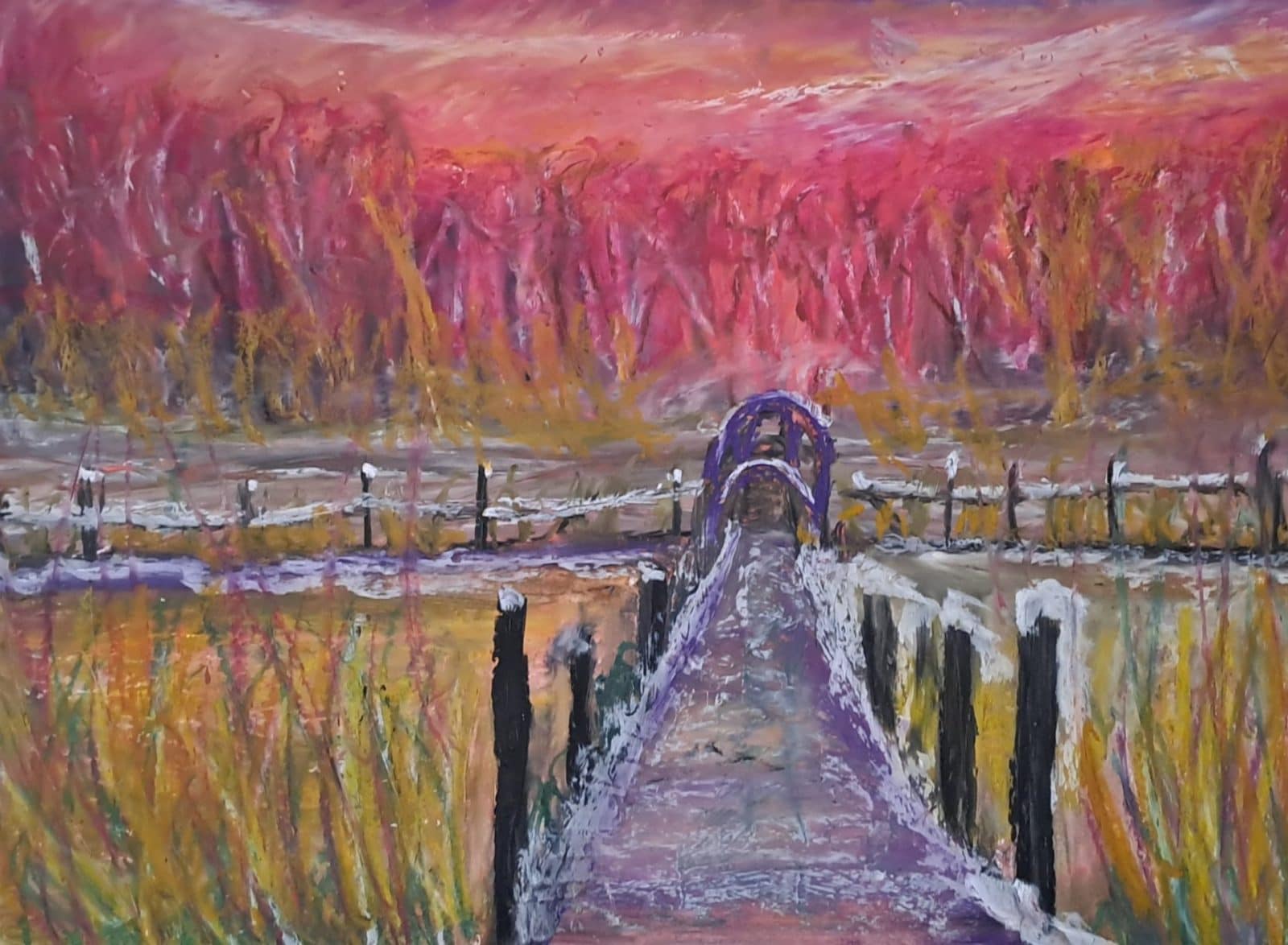
Oil pastels are often misunderstood. Many people associate them with simple “drawing”—like a giant crayon for kids. But for me, this medium is a way to quiet the noise of a busy day. It’s not just a tool; it’s a sensory experience.
There is a tactile joy in the way the pigment melts under the heat of my fingers. Unlike the cold precision of a brush or the sharp tip of a pencil, oil pastels demand a physical, skin-to-paper connection. I often use a piece of kitchen roll to scrub the color into large areas or blend it until it glows. This physical act of “pushing” the color into the paper is deeply grounding. It attenuates my strong anxiety in a way no other medium can; it forces me to be present in the friction of the stroke.
The “Speed” of Painting
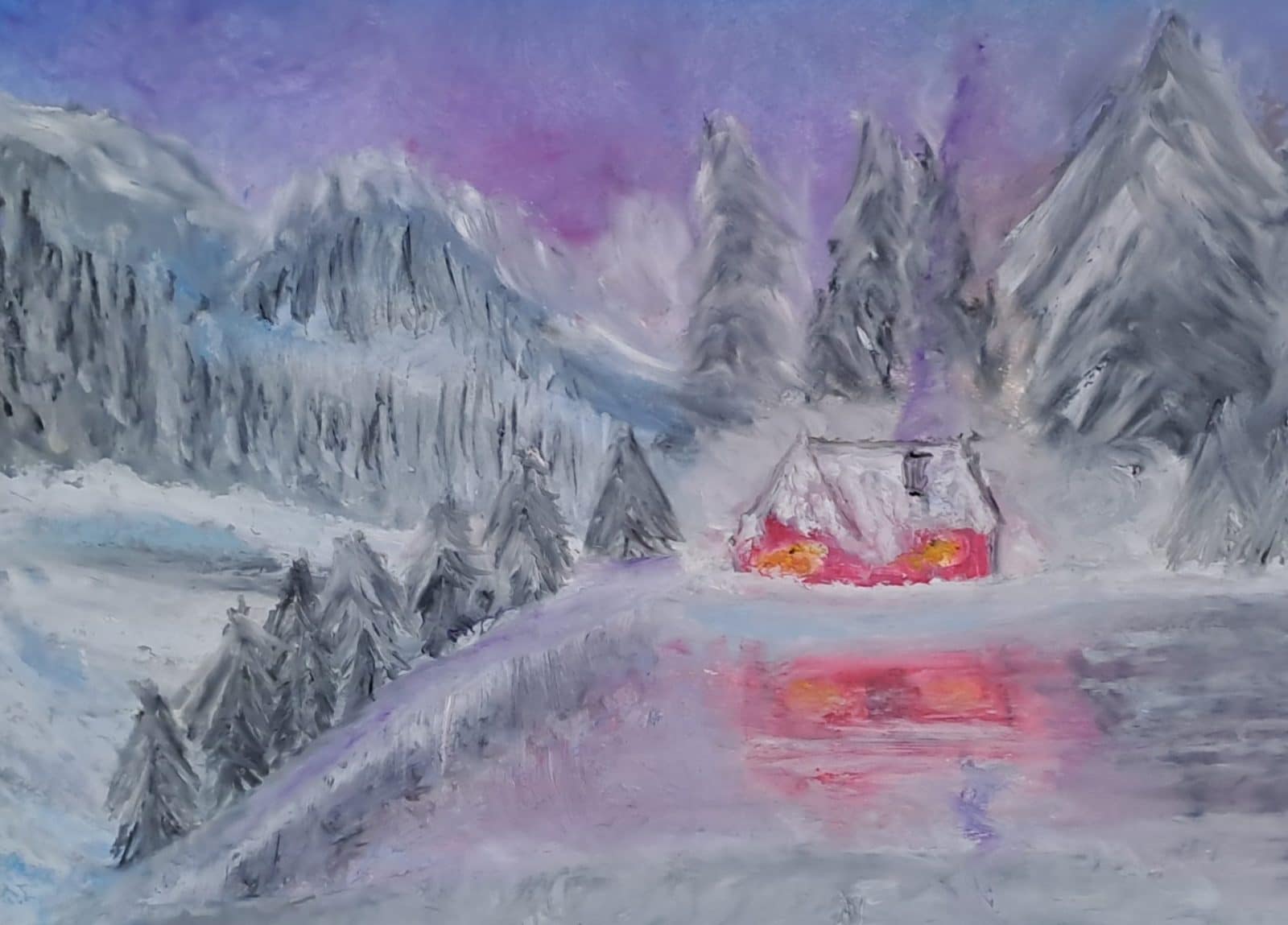
I have always preferred oil pastels over soft pastels (chalk). Why? Because of the velocity of the color. Chalk is etereal and dusty; it requires constant fixing and delicate layers. Oil pastels, however, are immediate. They are vibrant from the second they touch the paper.
If you learn to layer them and apply them with force, it stops being “drawing” and becomes true oil painting.
- The Beauty of the “Second Chance”: One of the most rewarding aspects of this medium is that you can always go back. If a landscape doesn’t feel right, you layer over it. You can scrape back, smudge, and redefine. It isn’t a medium for high-precision botanical work—for that, you need a fine brush—but for expressive landscapes and abstracts, it is incredibly rewarding.
From the Sofa to the Gallery: Professional Tips

Even though I paint these to relax, I treat the finished pieces with the respect they deserve as professional works of art. Because oil pastels are made of non-drying oils and wax, they remain “alive” and slightly tacky forever. If you are looking to sell or display your work, you must follow these rules:
- Secure your Support: Don’t let the paper move. Fix it firmly to your easel or a rigid board with masking tape. Because you have to apply pressure to blend, any movement can cause the paper to buckle or even tear.
- The “Mount” is Non-Negotiable: Never frame an oil pastel drawing directly against the glass. You must use a mount (passe-partout) to create a 2-3mm gap. If the glass touches the paint, it will eventually stick and ruin the piece.
- Rigid Backing: Ensure there is a strong backing board behind the paper. This keeps the work flat and prevents the wax layers from cracking over time due to humidity changes.
Final Thoughts
There is something beautiful about ending the day with paint under your fingernails. It’s a reminder that even in a world of high-speed internet and digital files, we still need the warmth of our own touch to create something that feels real.
What about you? Do you prefer the controlled precision of a brush, or do you crave the messy, grounding freedom of painting with your hands? Let me know in the comments below!
Thanks for reading
More of my paintings can be found on www.saatchiart.com/lauraartist68