
Yesterday , 11 December 2025 , I clicked “publish” on Amazon and sent my newest book into the world: Aging Earth, Aging Self.
I feel equal parts proud, nervous, and wildly curious about where it will land—because this book is not only about climate change and not only about aging. It’s about the strange, honest place where the two meet. Where your body changes and the planet changes, and you start noticing that both transformations can feel… personal.
This is a reflective, grounded book built from 25 clear, non-poetic chapters. No haze, no fog-machine metaphors. Just real life, real emotion, and real information—because I wanted it to be readable even on a tired day, even when your nervous system is already doing gymnastics.

Why I decided to write this now
Because I’m watching climate change shape the way we age.
Not in a distant, abstract “one day” way. In the daily way: sleep disruption during heat waves, anxiety spikes before storms, and that heavy fatigue when humidity clings to you like an unwanted opinion.
And for many of us—especially women navigating hormonal changes—these environmental pressures don’t arrive alone. They land on top of menopause, stress, caregiving, identity shifts, grief, reinvention, and the ongoing work of staying resilient.
I wrote Aging Earth, Aging Self because I wanted to connect the dots between:
- the aging body (hormones, sleep, mood, energy)
- the aging mind (anxiety, cognition, emotional regulation)
- and the changing environment (heat, storms, humidity, instability)
Not to scare anyone. But to name what many of us already feel.
How environment shapes emotion (a little science, the useful kind)
One of the most important threads in the book is the relationship between weather and the nervous system.
When temperatures climb, our bodies work harder to regulate internal balance. Heat can increase irritability, reduce sleep quality, and raise stress—partly because it pushes the body into a constant state of adjustment. Add humid air (which makes cooling through sweating less effective), and you get a recipe for exhaustion that feels emotional as well as physical.
Storms and sudden weather shifts can also be activating. Our brains are pattern-recognition machines: when the environment becomes unstable, the nervous system often reacts as if something is “coming”. That can show up as restlessness, worry, difficulty concentrating, or a sense of low-grade alarm.
This is not weakness. It’s biology.
In the book, I explore how environmental factors like heat, storms, humidity, and ongoing instability can influence:
- mood and irritability
- sleep and recovery
- focus and memory
- emotional resilience
- the intensity of anxiety
I’m not trying to turn readers into climate scientists. I’m offering a lens: if you understand what your body is responding to, you can meet yourself with more clarity and compassion.
From Italy to the UK: memory, identity, and weather as a companion
This story is also personal.
I draw from childhood memories in Italy—textures, light, seasons that felt reliable—and then from adult life in the UK, where transitions (and weather) can feel like quick costume changes.
Over time, I’ve learnt that identity is not a fixed portrait. It’s closer to mixed media: layered, revised, sometimes scraped back, sometimes rebuilt. My life has included big shifts—moving countries, changing work, navigating stress, and learning myself again inside a changing body.
And always, the background music of the world: the climate, the seasons, the air.
Why mixed media belongs in this conversation
I love painting in mixed media because it lets me tell the truth with texture.
I’m drawn to rough materials found on beaches or in woods—and yes, even coffee grounds (delicious in a cup, enchanting on a surface). These materials carry the memory of where they come from. They’re not polite. They don’t pretend the world is smooth.
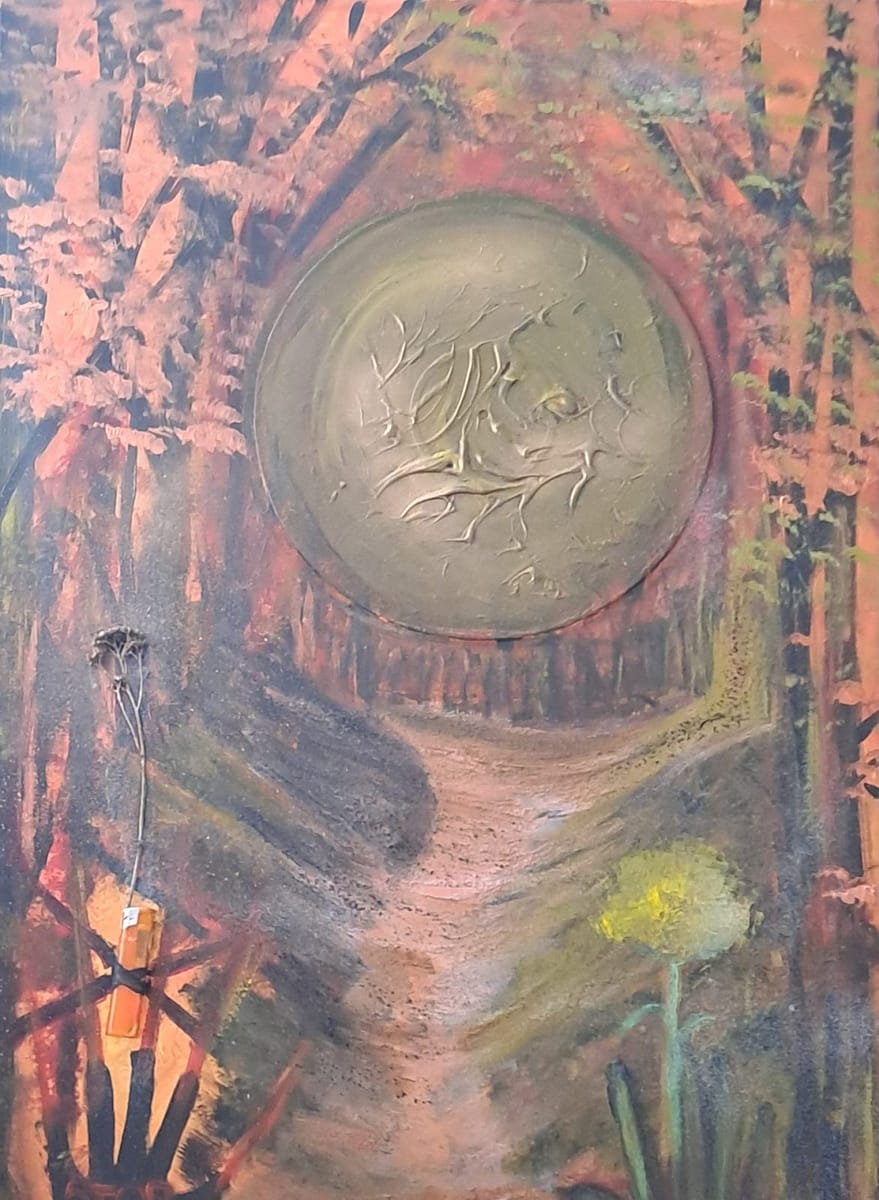
A piece of driftwood, a fragment of sea-worn plastic, sand, bark, rust, paper, ash—these are not just “supplies”. They’re evidence. They’re symbols of fragility and survival at the same time.
In Aging Earth, Aging Self, the book ends with a curated art portfolio: mixed-media works addressing climate change, environmental fragility, and our human connection to nature. Each piece is part of a larger conversation about responsibility, adaptation, and hope.


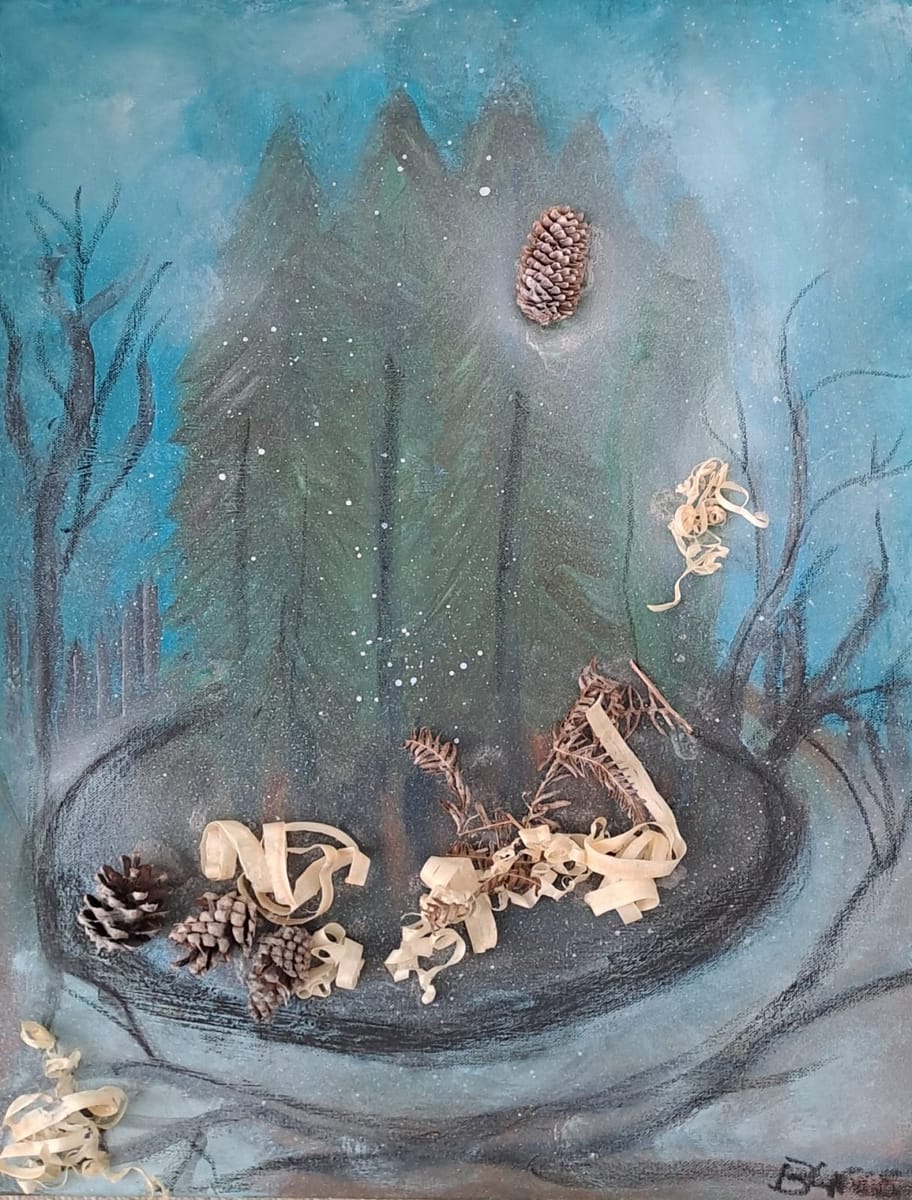
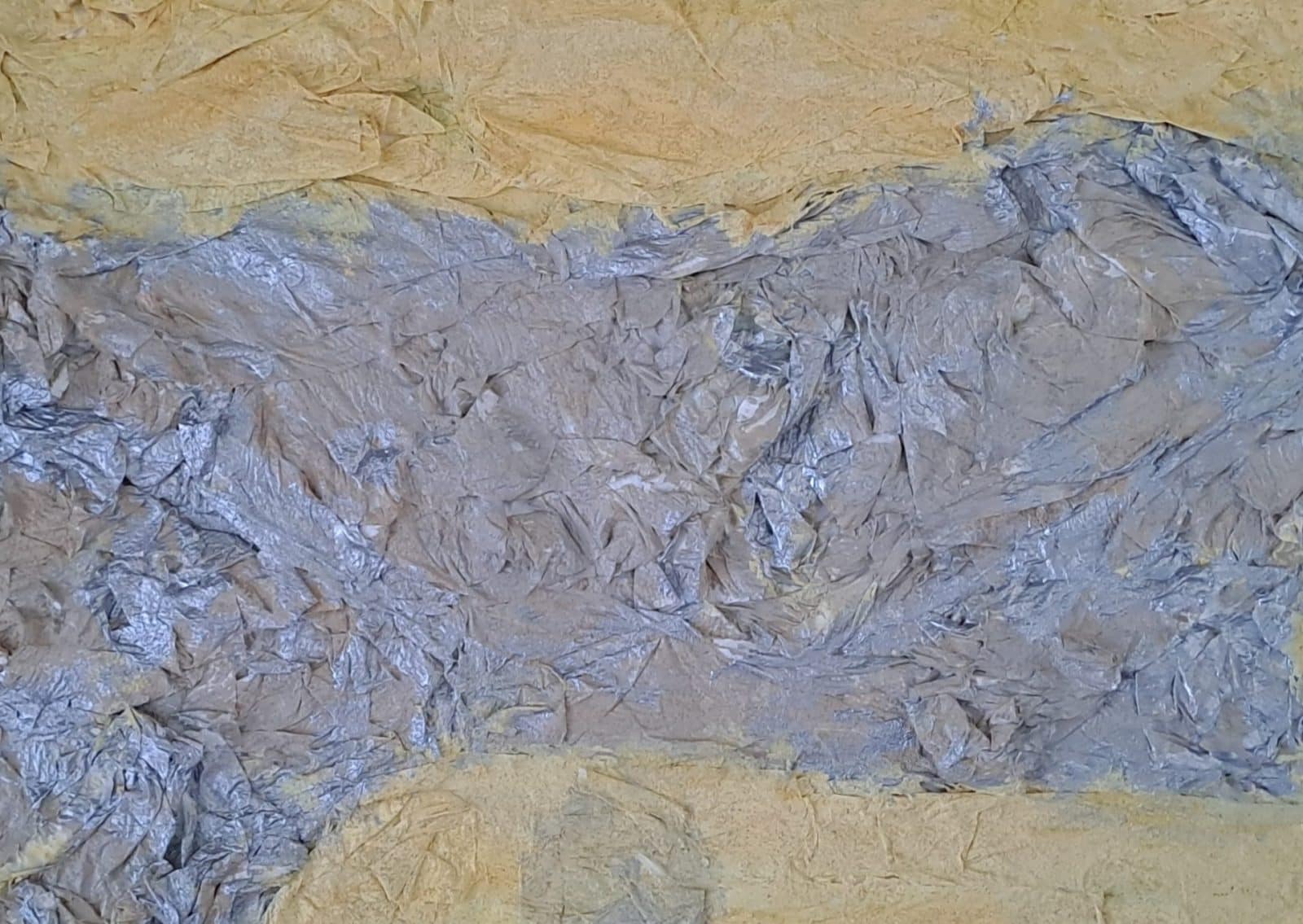
Because sometimes a painting says what a paragraph can’t.
What I hope readers feel while reading
I hope this book feels like sitting with someone who won’t dramatize your experience—but won’t minimize it either.
I hope readers feel:
- seen in their anxiety (without being defined by it)
- steadier in their changing body
- more informed about how weather can influence emotion
- inspired to notice the parallels between personal repair and planetary repair
- invited into responsibility without losing hope
Aging can be challenging. Climate change can be frightening. But understanding the connection between them can also create strength—because awareness gives you options. It gives you language. It gives you a way to respond instead of only reacting.
If you’re curious…
Aging Earth, Aging Self is now available on Amazon (published 11 December 2025). If you read it, I’d love to hear what chapter stayed with you most—because I wrote it to be lived with, not just finished.
Here the links on amazon.co.uk
And if you want to explore more of my work, my exhibitions, and my mixed-media practice, you can find me here:
Thank you for being part of this journey—with all its layers, weather, grit, beauty, and (occasionally) coffee grounds.