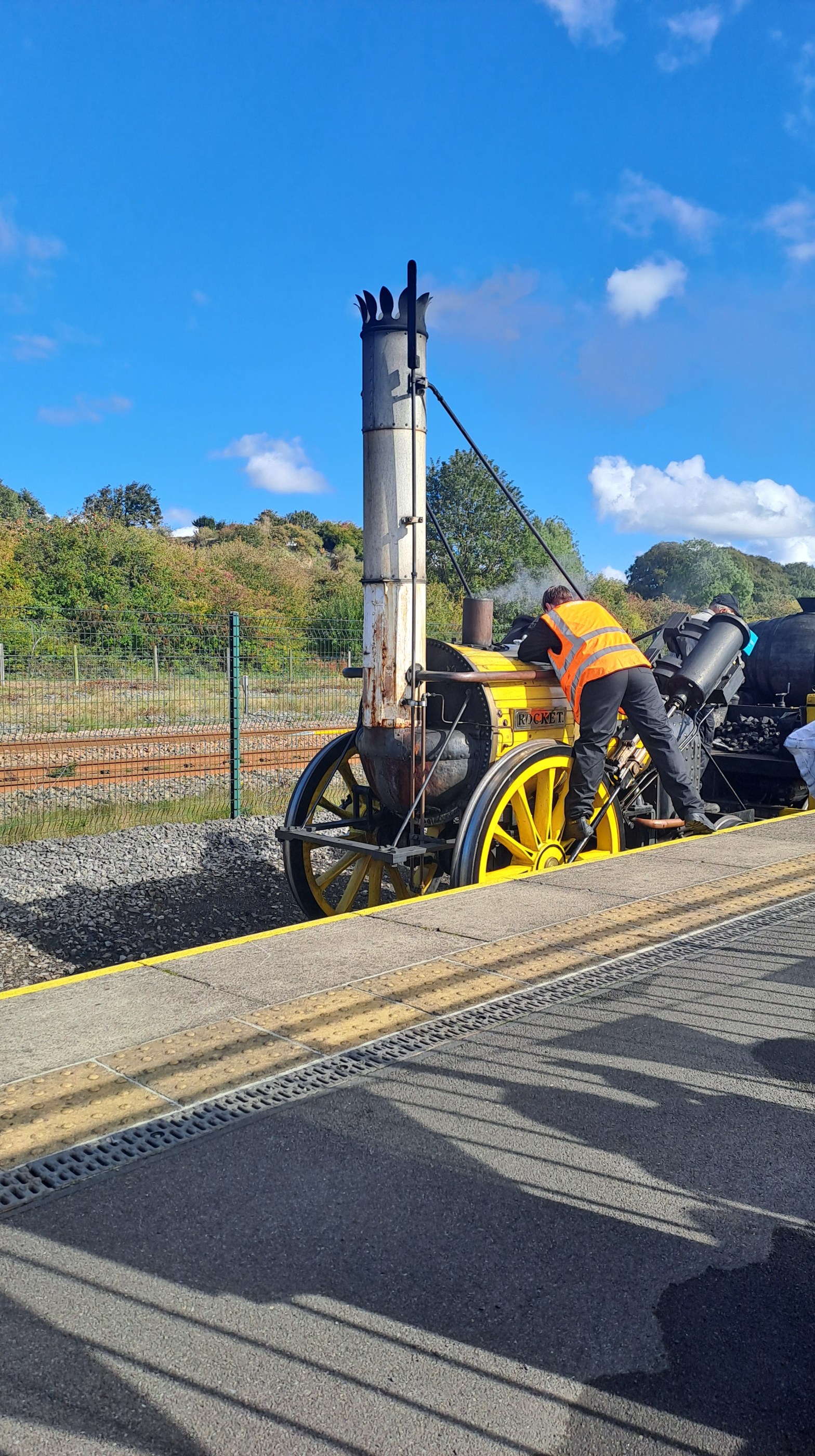

Last Sunday, 28th September, I witnessed something unforgettable near Stockton, in the North East of England. It was a warm, sunny morning — the kind that feels like a gift at the start of autumn. My husband, who was born in Stockton 52 years ago, and I had come to see the newly restored replica of Locomotion №1, the world’s first public steam locomotive, running once again on the historic track it first travelled over 200 years ago.
On 27th September 1825, Locomotion №1, built by George Stephenson, made history as the first steam engine to carry passengers on a public railway—from Shildon to Stockton. This Sunday morning, people from all over gathered to see that moment relived. Families, train lovers, and history enthusiasts stood side by side, waiting for the familiar hiss of steam.
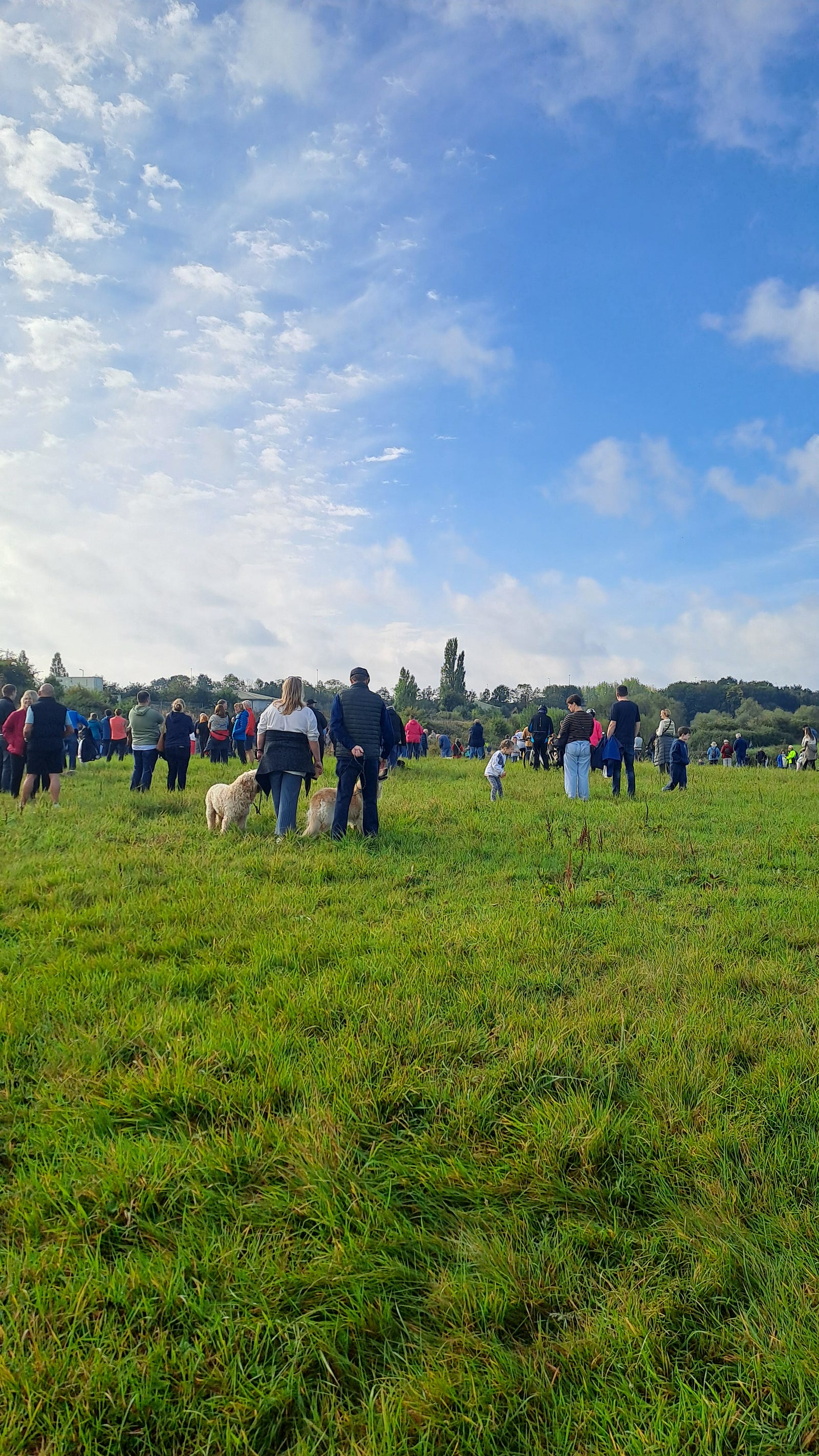
And then — there it was. A gentle, slow arrival. Steam curling through the air, the engine breathing like something alive. The sound of the whistle cut through the crowd, and suddenly, the past didn’t feel so far away.
It was an emotional moment for me. My father was a train driver in Italy for over 40 years, and I grew up hearing stories about trains, engines, stations, and journeys. Seeing this historic replica come into view felt deeply personal — as if a thread from my past had quietly tied itself to this celebration of history in England.
After the event, we visited the Locomotion Museum in Shildon, where we could see up close the replicas of both Locomotion №1 and Rocket—another revolutionary steam engine designed by George Stephenson. Rocket famously won the Rainhill Trials in 1829, proving that steam locomotives could be fast, reliable, and the future of public transport. It went on to run the first passenger line between Manchester and Liverpool, another turning point in railway history.
As we walked through the museum, I couldn’t stop thinking about Newcastle, the birthplace of both George and his son Robert Stephenson. Robert, like his father, was a brilliant engineer — he designed the beautiful High Level Bridge over the River Tyne, which still stands as a symbol of Victorian ingenuity.
Yet, it’s heartbreaking that Newcastle hasn’t fully embraced or celebrated this incredible legacy. There is no major museum dedicated to the Stephensons, no central monument to their impact. The city sometimes feels isolated from the global story it helped shape. And that’s a loss — not only for the people of the North East but for anyone who values innovation and courage.
Still, that morning near Stockton gave me hope. Hope that history can still bring people together across generations and places. That steam and steel still stir something inside us. And that maybe, just maybe, more people will rediscover the power of the Northeast—not only as a place of industry, but as a place where the world was set in motion.
Thanks for reading.
 Laura Bernardeschi Nelson artworld and travels