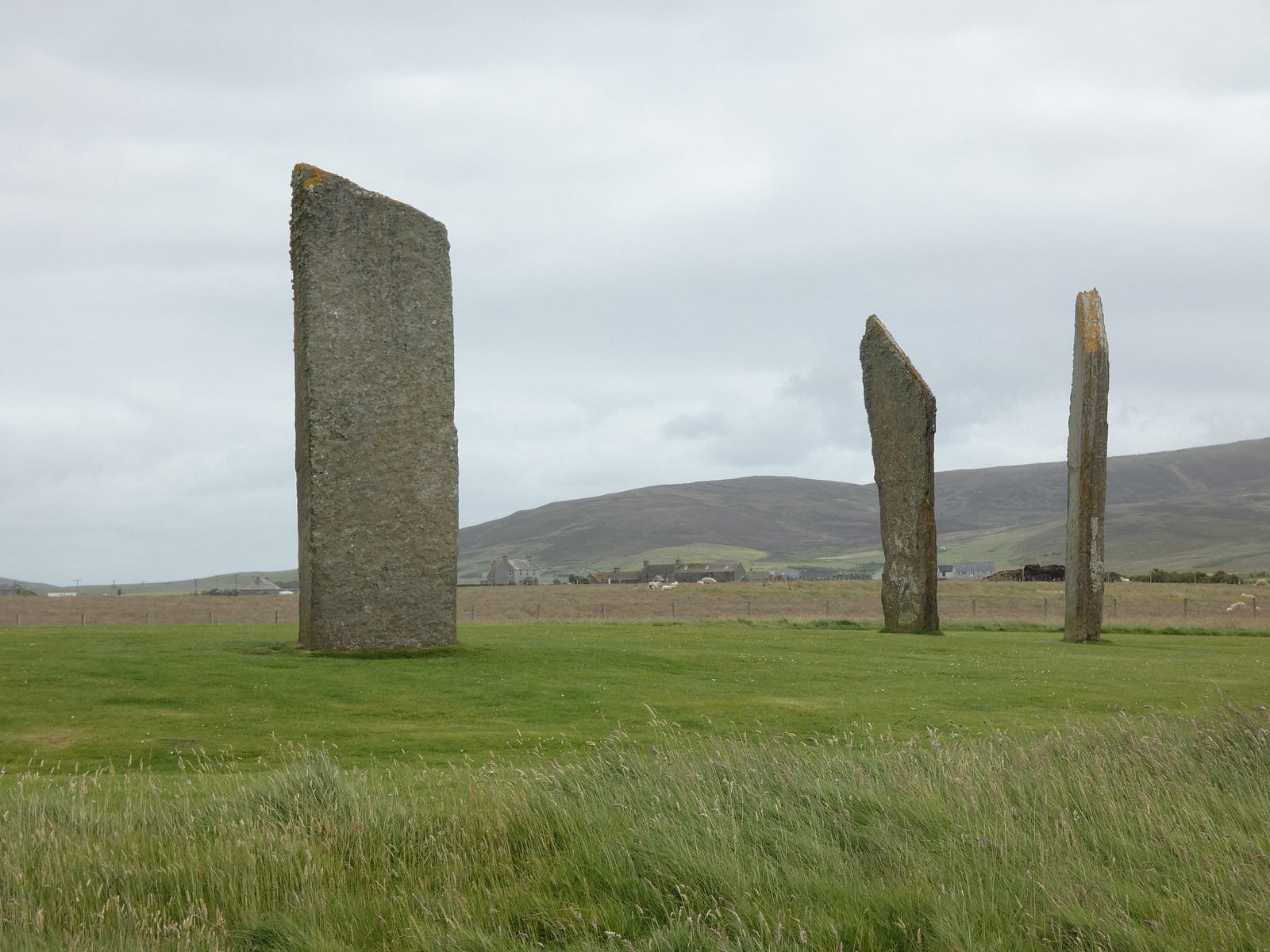
After 13 years of living in the UK, I decided with my husband to spend a few days on the Orkney Islands, which are based in the north of Scotland.
I did not know much about their history, but a good friend a few years ago told me they were worth visiting for the history and the amazing and wild landscape.
So after 8 hours of driving among Northumbria and the beautiful Highlands with our Tesla from Newcastle upon Tyne, including an hour spent in Aviemore recharging the battery of the car, we arrived at Gills Bay ready for the ferry.
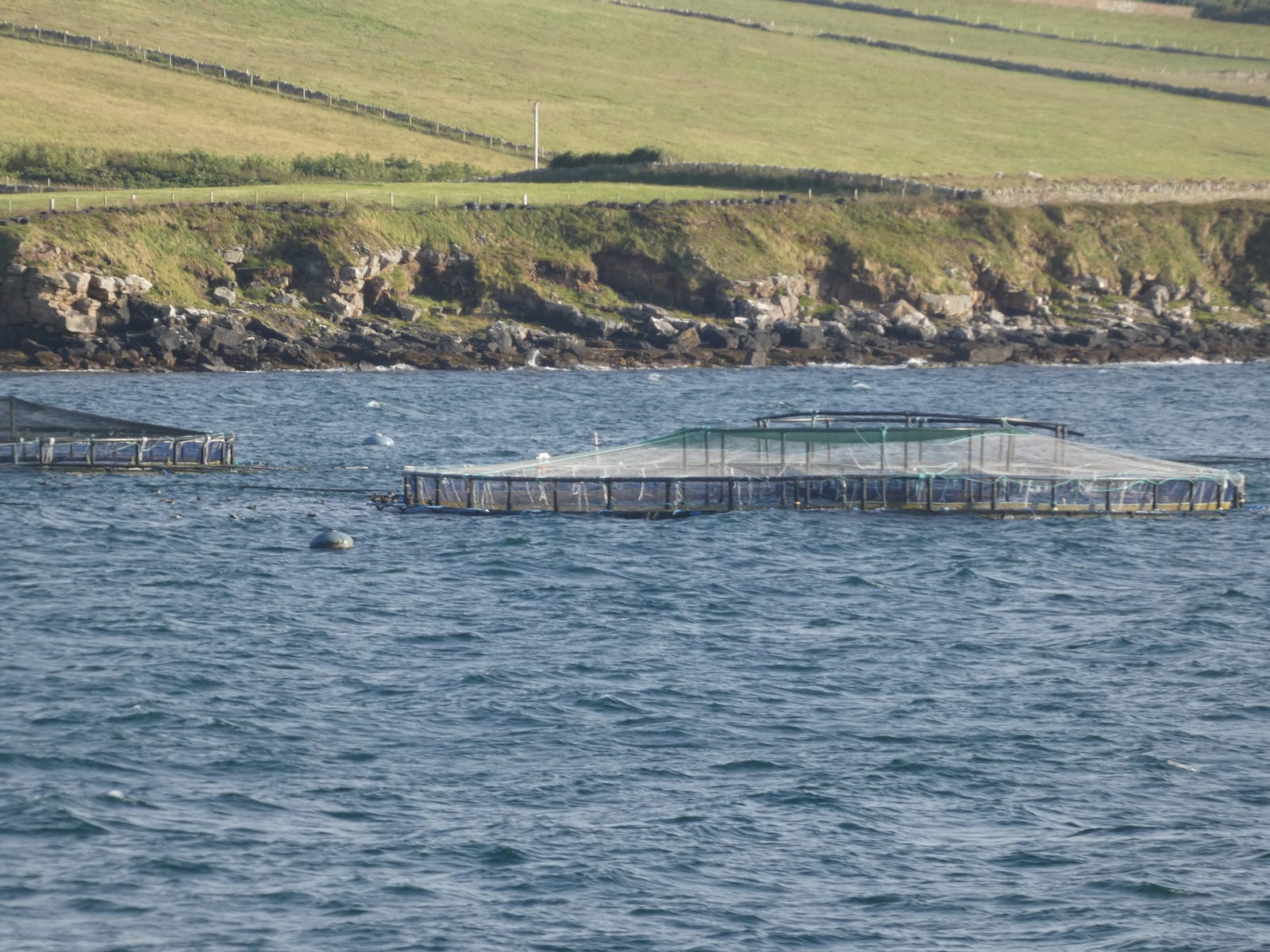
The cruise was starting at 6.30 pm, but it was advised to arrive half an hour earlier. In the little harbour, there is a toilet and a ticket office where you can take some leaflets to decide what to visit once you arrive.
Penthland Firth
There are several ways to travel to Orkney, but my husband decided to use this ferry called Penthland because it is less expensive and faster than the others. The service was good even if the ferry was like a big catamaran, and I was not feeling very comfortable in that area of the sea. In reality, this shape of the ship helps against rough seas.
The cruise went well spent watching the European shags, Atlantic puffins, and other birds diving into the waves of one of the most dangerous seas in the world called Penthland Firth, the treacherous strait between Caithness and the Orkney Islands. It was—and is—a very dangerous area for shipping because it has one of the most powerful tidal currents in the world. This can create tidal swell waves several metres in height.
Here is the link to check how many ships got in trouble when crossing this sea https://www.caithness.org/caithnessfieldclub/bulletins/1984/october/wrecks_of_Pentland_firth.htm
After one hour and fifteen minutes, we arrived on time at St. Margaret’s Hope and we were immediately surrounded by the huge history of this side of the world.
We booked our hotel in the capital, Kirkwall which is on the island called Mainland and we had to cross four little islands connected by four Churchill barriers, built during the Second World War by the Italian prisoners kept in a nearby camp.
The light of the sun at 8 pm was still too strong for their position in the north of the planet, and the reflection of the sea matched perfectly with the different shades of green.
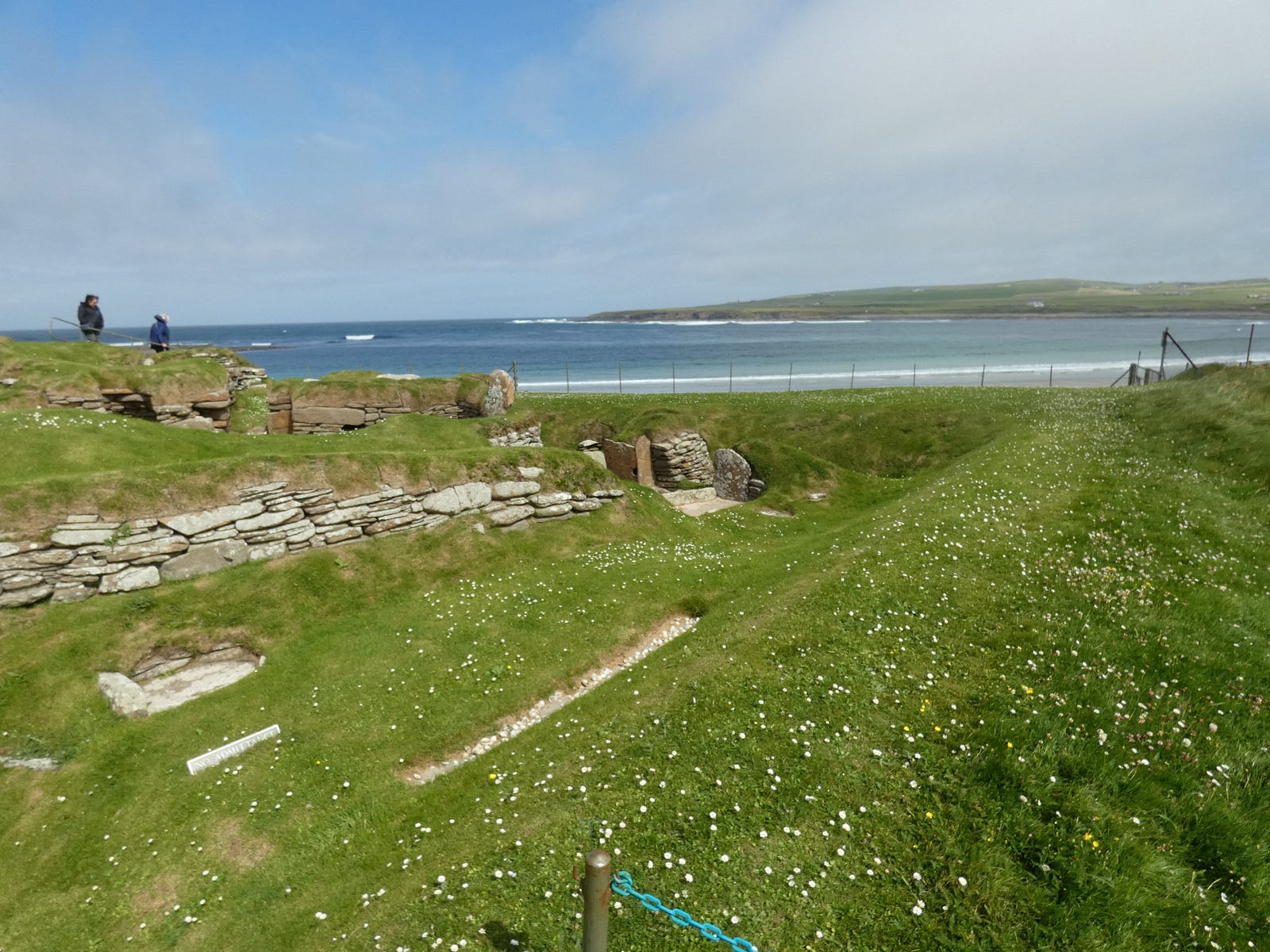
There are not many trees left on the Orkney, but the landscape is still striking with its hills, farms, and kettles around.
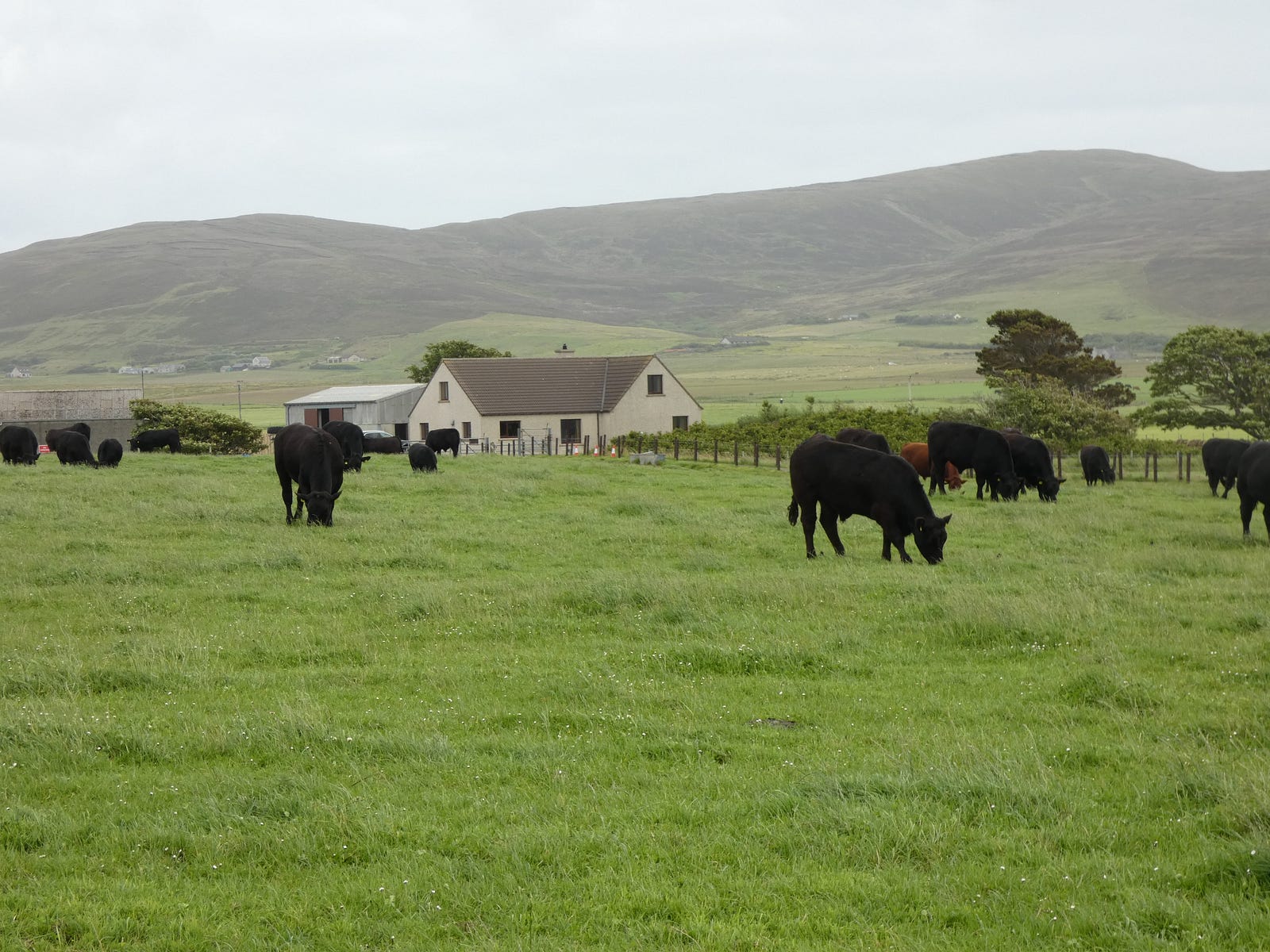
From Saint Margaret to Kirkwall, there are four islands in total to explore on your journey here, featuring one of Orkney’s most beautiful villages, ancient sites, wartime heritage, and some spectacular scenery.
As far as road trips go, the route through Burray and South Ronaldsay, encompassing the Churchill causeways and the small islands of Lamb Holm and Glimps Holm, is among the best to be found anywhere. The barriers were built to protect the naval anchorage of Scapa Flow from U-boat attacks after the sinking of HMS Royal Oak during WW2, and you can still see the remains of earlier blockships in the water nearby.
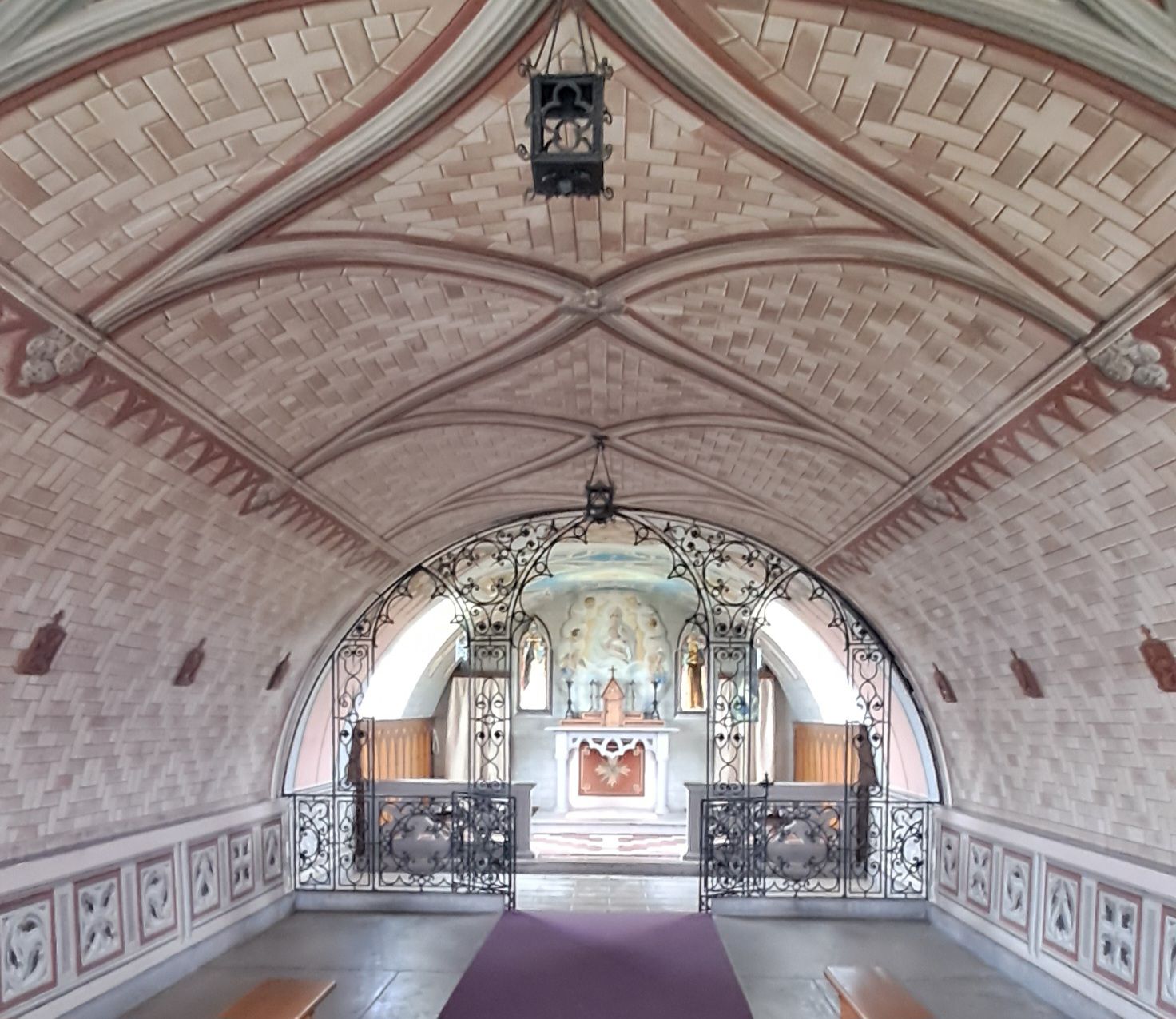
After leaving the harbour and crossing the first barrier, you’ll arrive in Lambholm. Here you’ll find one of Orkney’s most enduring attractions, the Italian Chapel. Constructed by Italian Prisoners of War, who were taken to Orkney to build the Churchill Barriers, the chapel is a symbol of hope and peace from a dark time in history.
The Italian Chapel

In October 1939, a German submarine under the command of Gunther Prien entered Scapa Flow and sank the British battleship ‘HMS Royal Oak’ with the loss of 834 lives. Winston Churchill, at that time First Sea Lord, visited Orkney and the decision was taken to construct barriers to save Scapa Flow to make the base for the home fleet more secure.
A shortage of manpower to construct the barriers coincided with the capture of thousands of Italian soldiers fighting in North Africa, so a decision was taken to transport 550 men to Camp 60 on Lamb Holm and a similar number to Camp 34 in Burray.
Following a request from the camp priest, Fr Giacobazzi, it was agreed that two Nissen huts would be joined together to provide a chapel. Among the Italians in Camp 60 was an artist, Domenico Chiocchetti, and he was given the task of transforming the two Nissen huts into a chapel. He was assisted by other tradesmen, in particular Giuseppe Palumbi, a blacksmith, and Domenico Buttapasta, a cement worker.
Domenico Chiocchetti carried in his pocket a small prayer card given to him by his mother before he left his home in Italy, and it was the image on that card of the Madonna and Child by Nicolo Barabino on which Chiocchetti based his painting above the altar in the Chapel. When the Camp Commander, Major Buckland, realised that the prisoner was a very talented artist he was allowed to continue painting to make the building more attractive.
Now, decades after the completion of the Chapel, it is one of Orkney’s most loved attractions.
There is also a strong friendship with the town of Moena in Italy, the home of Chiocchetti, and Orkney, and members of the family visit the islands from time to time. Chiocchetti’s daughter, Letizia, is an Honorary President of the Preservation Committee. Antonella Papa, a restoration artist from Rome, who had previously done work in the Sistine Chapel, has also spent time working in the Chapel to refresh areas of Chiocchetti’s painting.
In August 2014, three of the Station of the Cross were stolen. Replacement plaques carved in Moena are in place in the Chapel, but this has resulted in the installation of CCTV cameras, which, it is hoped, will deter any further damage to the Chapel.
The Preservation Committee do hope visitors will enjoy their time in the Chapel. A small booklet is available in English, Italian and German, which, for a donation of £1.00, tells the story in words and pictures and gives a full explanation of the Chapel and its construction.
Next door, you’ll find the Orkney Wine Company and J. Gow Rum, two family-run businesses offering a fantastic range of wine and spirits, as well as tastings and tours.
Discovering the island south of the Mainland
Further south and across another causeway, the road traverses Glimps Holm, a blink-and-you’ll-miss-it isle, but one that is home to a spectacular beach with sand snaking along its east coast, ending under the shadow of the third Churchill Barrier. The blockships here are popular with recreational divers, and Kraken Divers offers ‘try-a-dives’ for all levels of experience.
Over the third and smallest Churchill Barrier is Burray, a small but thriving community of around 350 people. It has a well-stocked shop, a hotel bar and beautiful beaches. There’s also an excellent play park and crazy golf course, with putters available to hire from the shop. Burray is also home to the fascinating Orkney Fossil, an incredible collection of fossils up to 380 million years old, as well as items from Orcadian history throughout the 20th century. There’s an extensive display about life on the islands during the First and Second World Wars, plus an excellent gift shop too.
The final Churchill Barrier linking Burray with South Ronaldsay now has a huge expanse of sand on its east side, completely covering the concrete blocks that make up the causeway. The result is a fantastic beach with plenty of wildlife-watching opportunities.
South Ronaldsay itself is Orkney’s fourth-largest island and home to St. Margaret’s Hope, possibly the most picturesque village in the archipelago. Known locally as ‘the Hope’, the village is a charming place for a stroll, with local shops.
Head west of the village past the beach at Sands Wright, and you’ll come to the coast at Hoxa Head. A walk here gives you the chance to take in the huge expanse of Scapa Flow, as well as an opportunity to explore some of Orkney’s finest wartime buildings.
In South Ronaldsy, you can have one of the best walks, with a stretch of eastern coastline from the spectacular Windwick up to Eastside as one of the highlights. Another route on the west coast from Brunswick provides fantastic seal-spotting opportunities during the autumn months and views over the Pentland Firth.
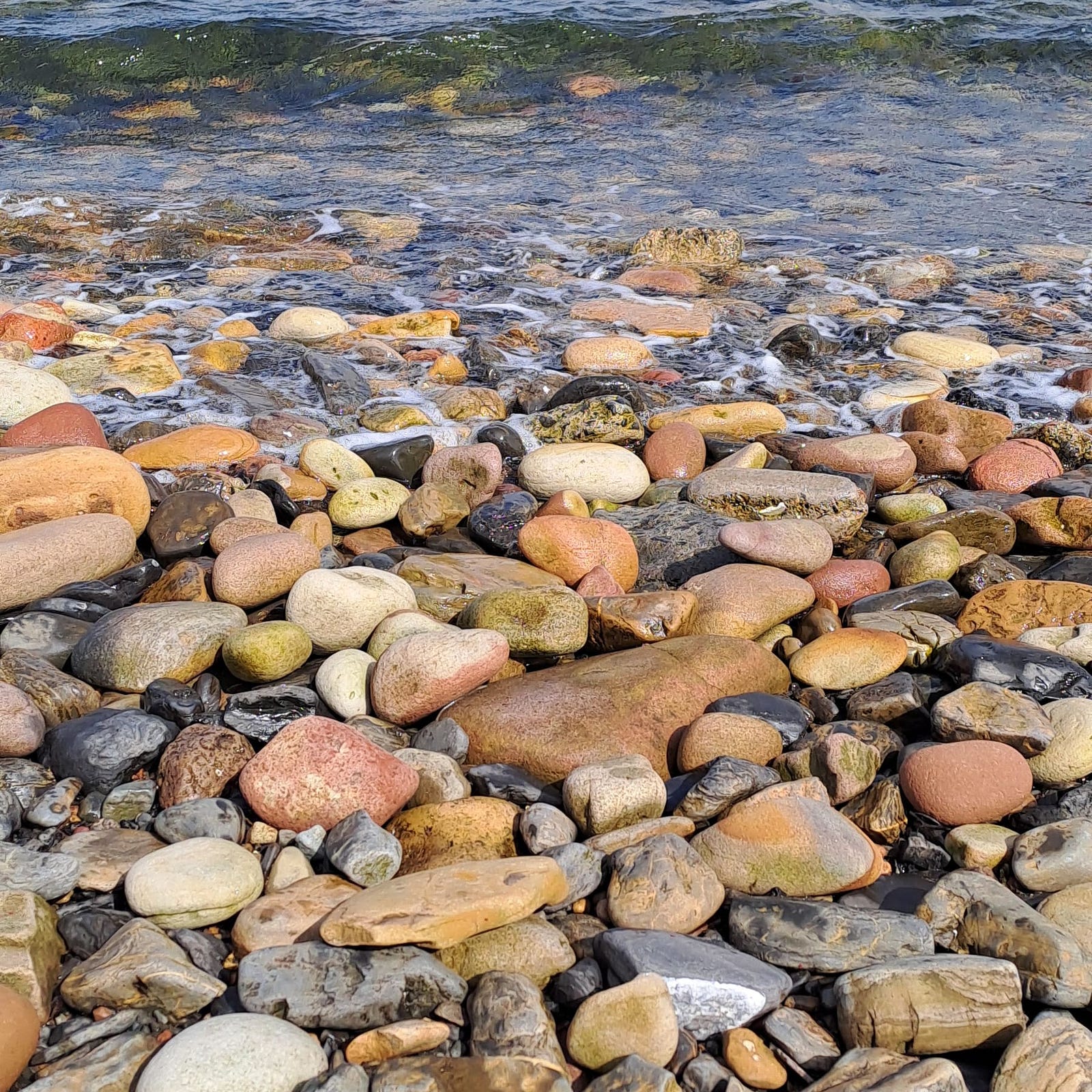
After 12 hours of travel, we finally arrived at our hotel in Kirkwall.
It was sunny even at 9 pm and there were no clouds in the sky.
Unfortunately, it was cold, so remember to always bring a jacket with you. a good winter jacket, a wool hat, gloves and a scarf when you decide to visit these islands.
Kirkwall is overcrowded in July.
Because these islands are becoming more and more popular, including the cruises that arrive every day, it is not easy to find a bedroom to book and even work in a restaurant.
It is advised to book a couple of days before your table and even one month before your hotel bedroom.
Our hotel, found thanks to Expedia, was expensive, but the service received was not worth the money we paid.
Moreover, the supermarkets close at 4 pm on Sundays (the day of our arrival), so if you can not find a table to book, you really must wait the following morning to add some food to your stomach.
During the week we stayed in Kirkwall we shopped out for dinner at Aldi and Tesco, a couple of supermarkets not far from our hotel because we could not find a table to book.
In the end, on the first day of our arrival, we decided to go to sleep at 10 pm exhausted but happy, forgetting to close the curtains to stop the strong light coming through.
Thanks for reading
 Laura Bernardeschi Nelson artworld and travels